Research and news
Our newest paper sets out four questions to ask of every measure of social media use.
Context
Where does it happen?
Your day, your phone, the app
Access
How is it measured?
Logged, asked, tested, nudged
Stratum
What does it cover?
What you see, what you do, your body, your mind
Timescale
How often?
A moment, a day, a week, years
What Myranda adds
In the paper's simulation of 120 people over 28 days, the researchers built in one effect: time on feeds lowers that evening's mood. How much of it can a study find?
Without knowing what was on screen
47%With Myranda's record of what was on screen
77%
The Algorithmic Mirror study
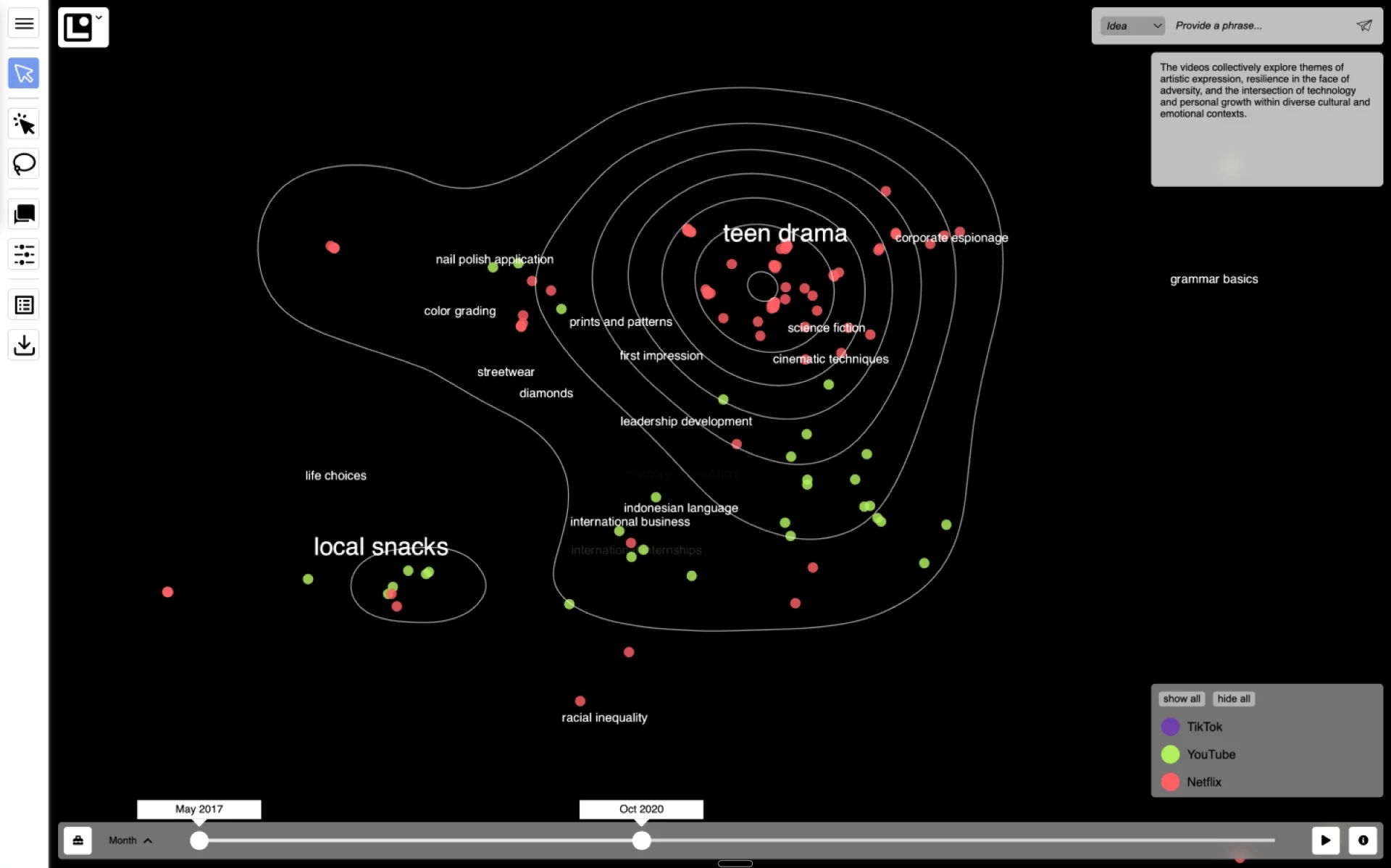
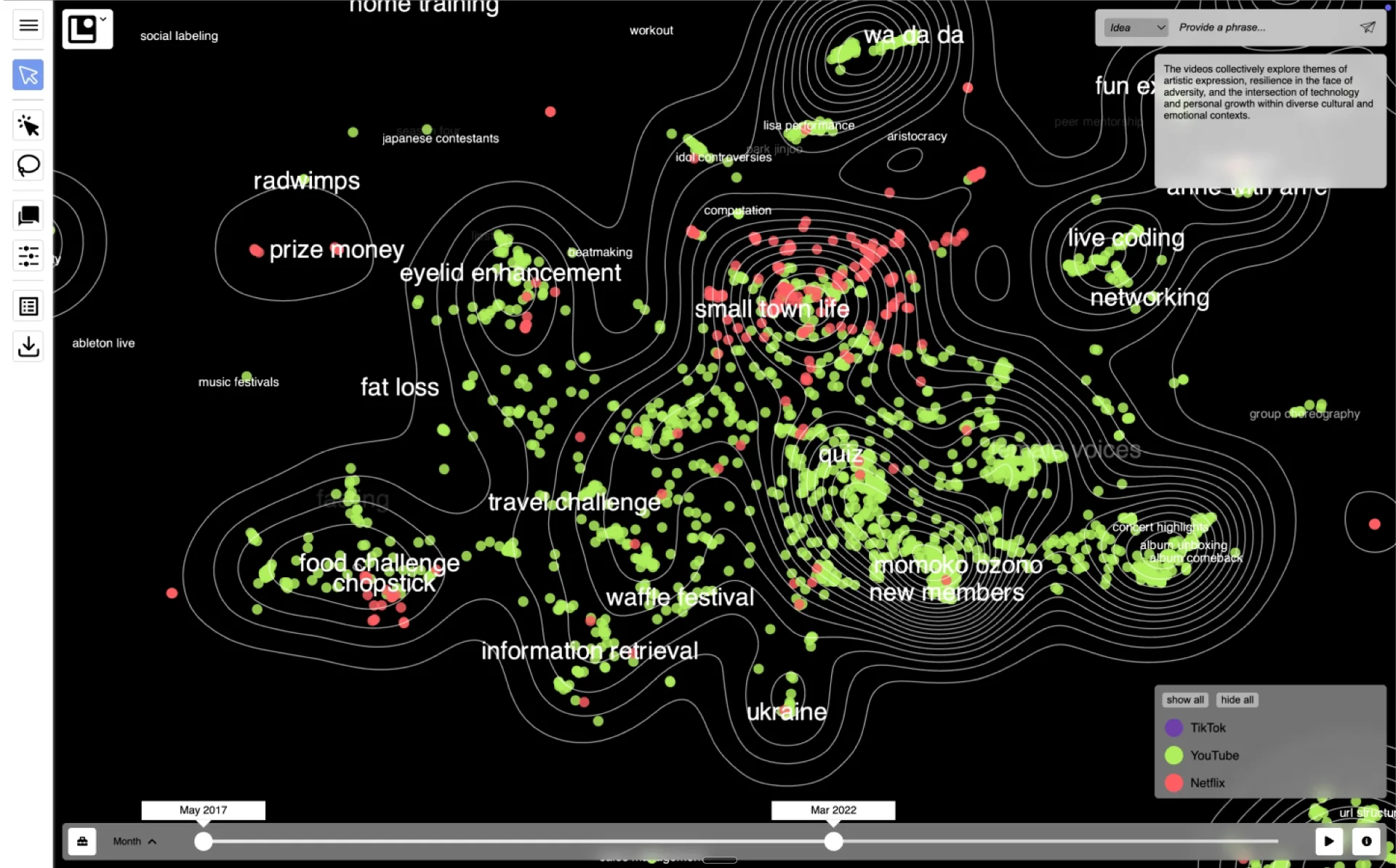
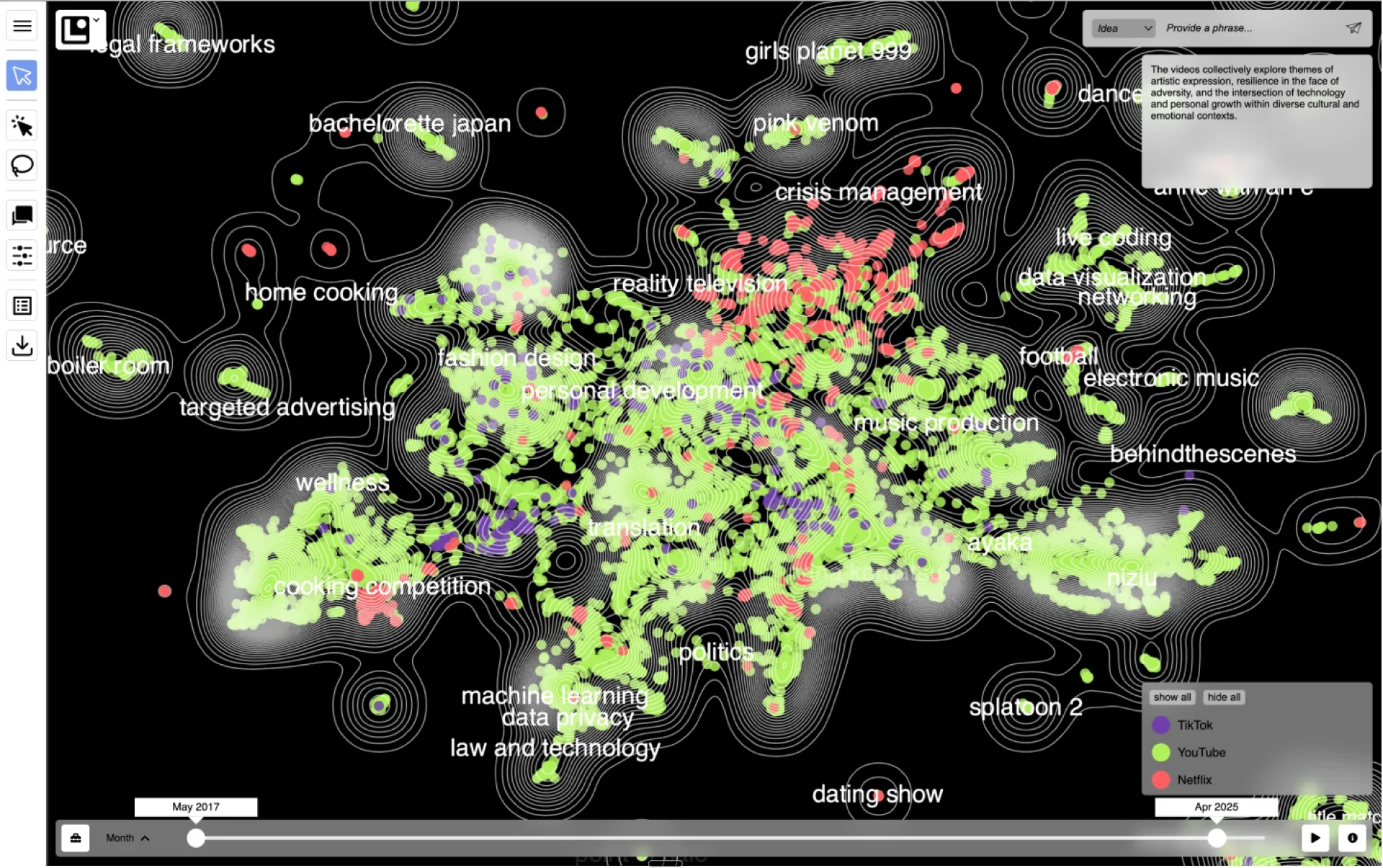
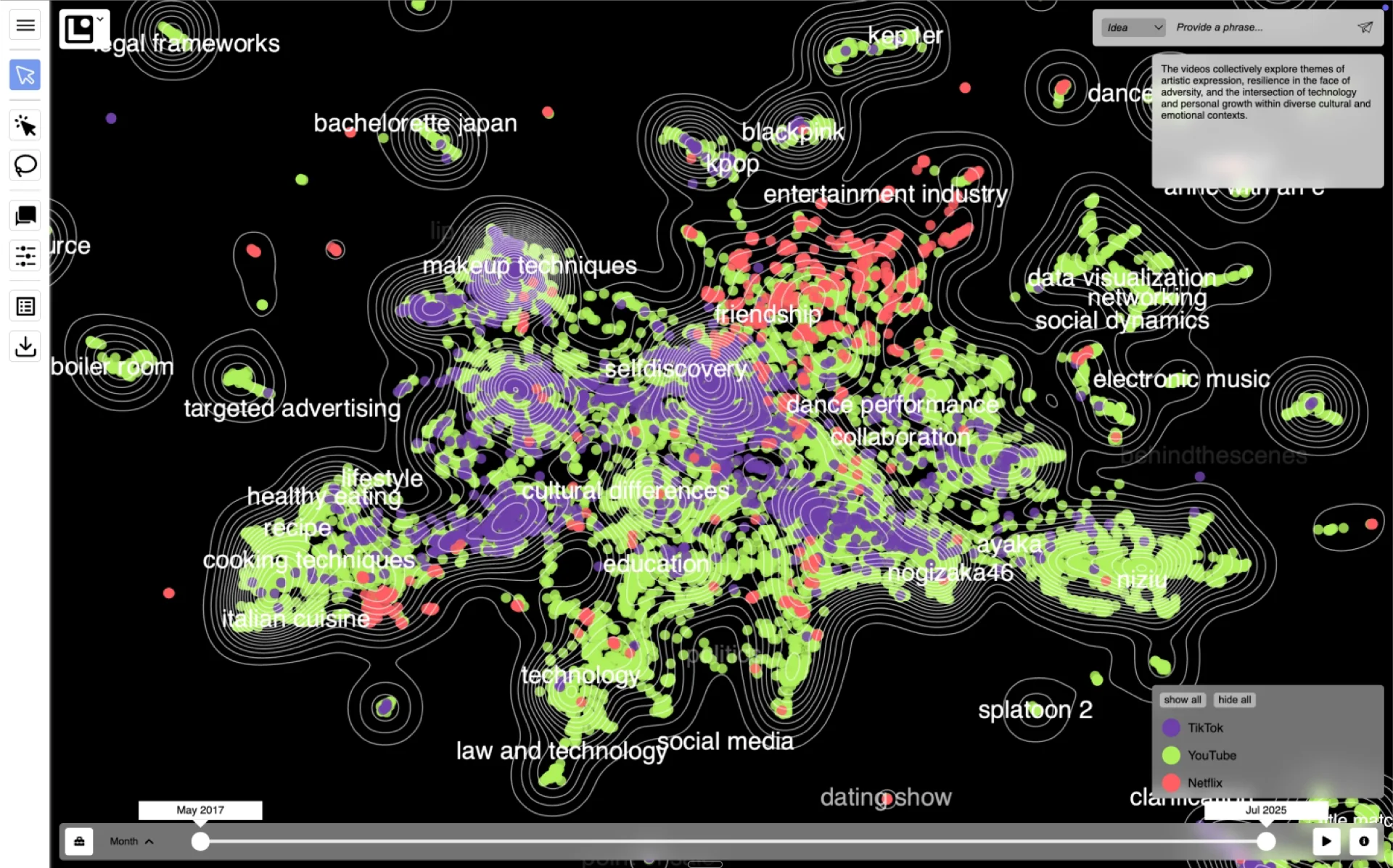
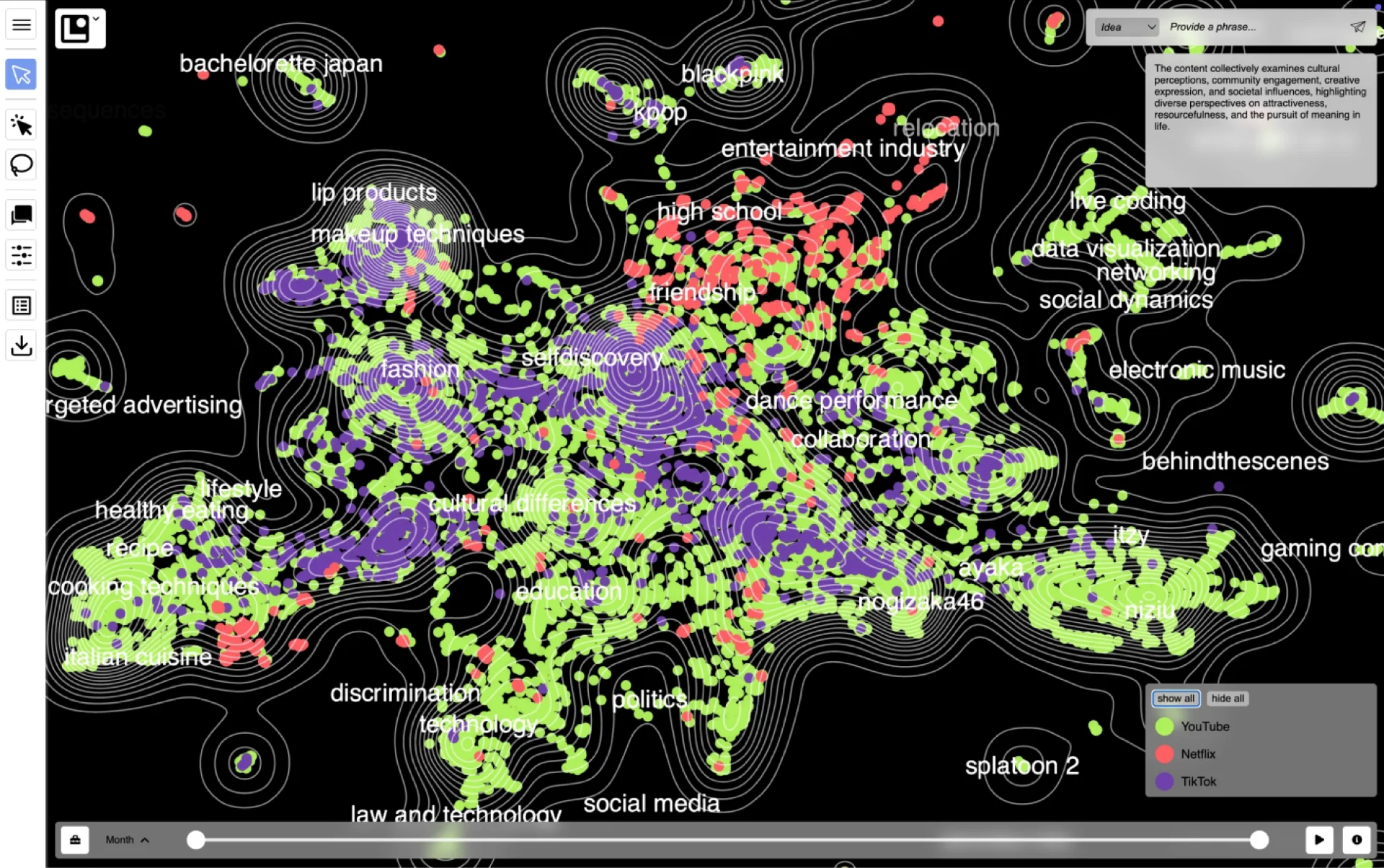
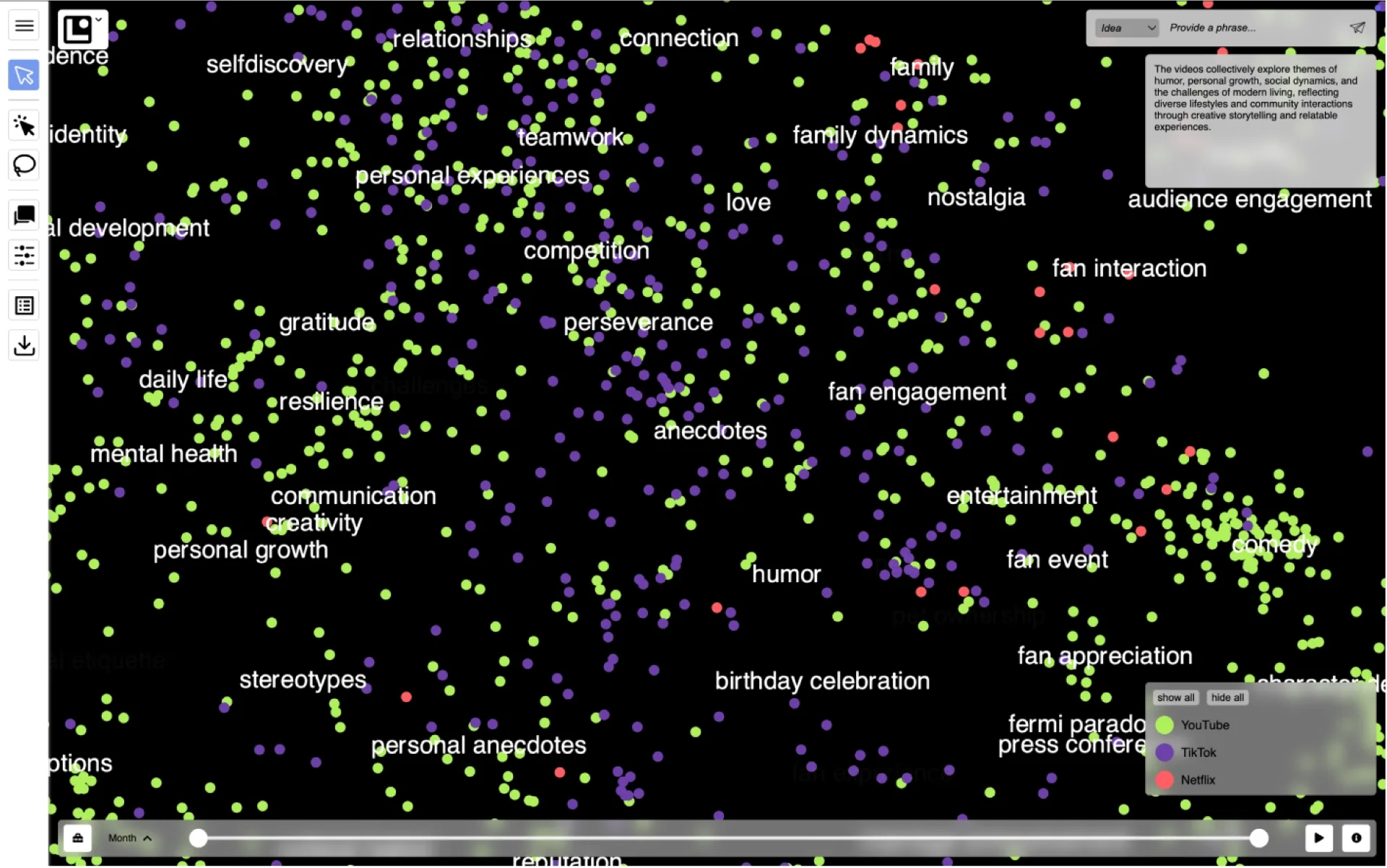
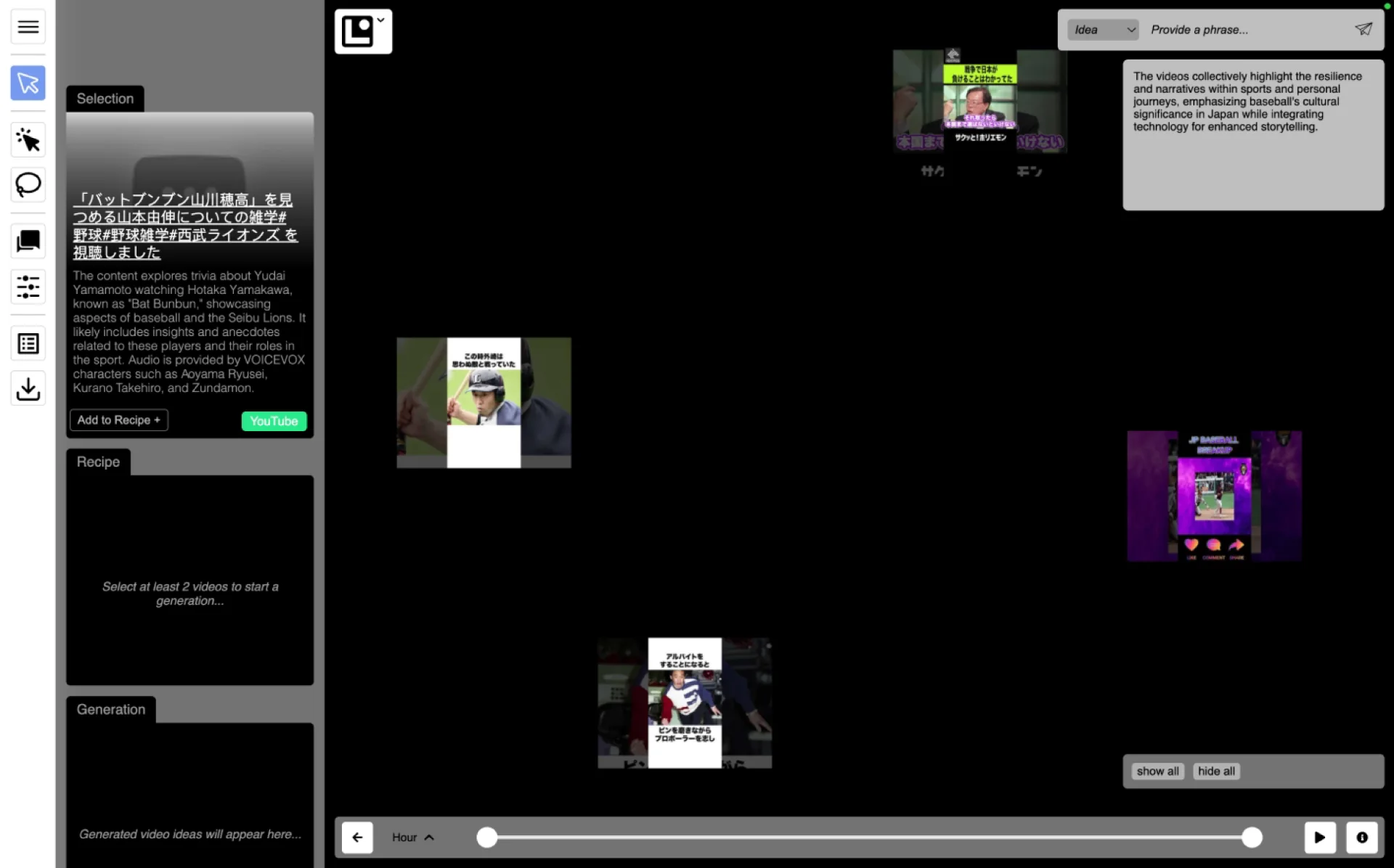
Each mark is one of the 27 who took part.
27 adolescents, aged 12 to 16, exported their own data from YouTube, TikTok and Netflix.
See it in action
A sample Algorithmic Mirror, on anonymised data.
Try the demoTry it with this email and password:
email: mirror@gmail.com
pass: mirror
News
Read the article in GermanSafe social media needs more than age limits
Read the articleWe are already making social media safer - now it is time to give us safety!
Papers
- 2026Read the paper
The CAST-framework: Measure and model social media use as a multi-level phenomenon through real-world applications
Preprint - Read the paper
The Data Mirror: Helping Adolescents See and Shape Their Digital Selves on Social Media
Digital behaviourism: A functional approach to behaviour in digital environments
Preprint- 2025Read the paper
Algorithmic Mirror: Designing an Interactive Tool to Promote Self-Reflection for YouTube Recommendations
- 2024Read the paper
Healing Privacy Wounds with SPLINT: A Psychological Framework to Preserve Human Well-Being during Information Privacy Trade-Offs
A Longitudinal In-the-Wild Investigation of Design Frictions to Prevent Smartphone Overuse
- 2023Read the paper
Directing smartphone use through the self-nudge app one sec
- Read the paper
A framework for promoting online prosocial behavior via digital interventions